The DDQX Learning White Coat Diagnostic
Find the real bottleneck in your White Coat Journey.
This 5-question diagnostic helps you identify where you are on the path to medicine, which pressure point is most urgent right now, and what kind of problem is most likely limiting your progress.
What the Diagnostic Asks & Screens For
The diagnostic begins by asking where you are right now. From there, the questions adjust to stage-specific work you are trying to complete and issues you are encountering.
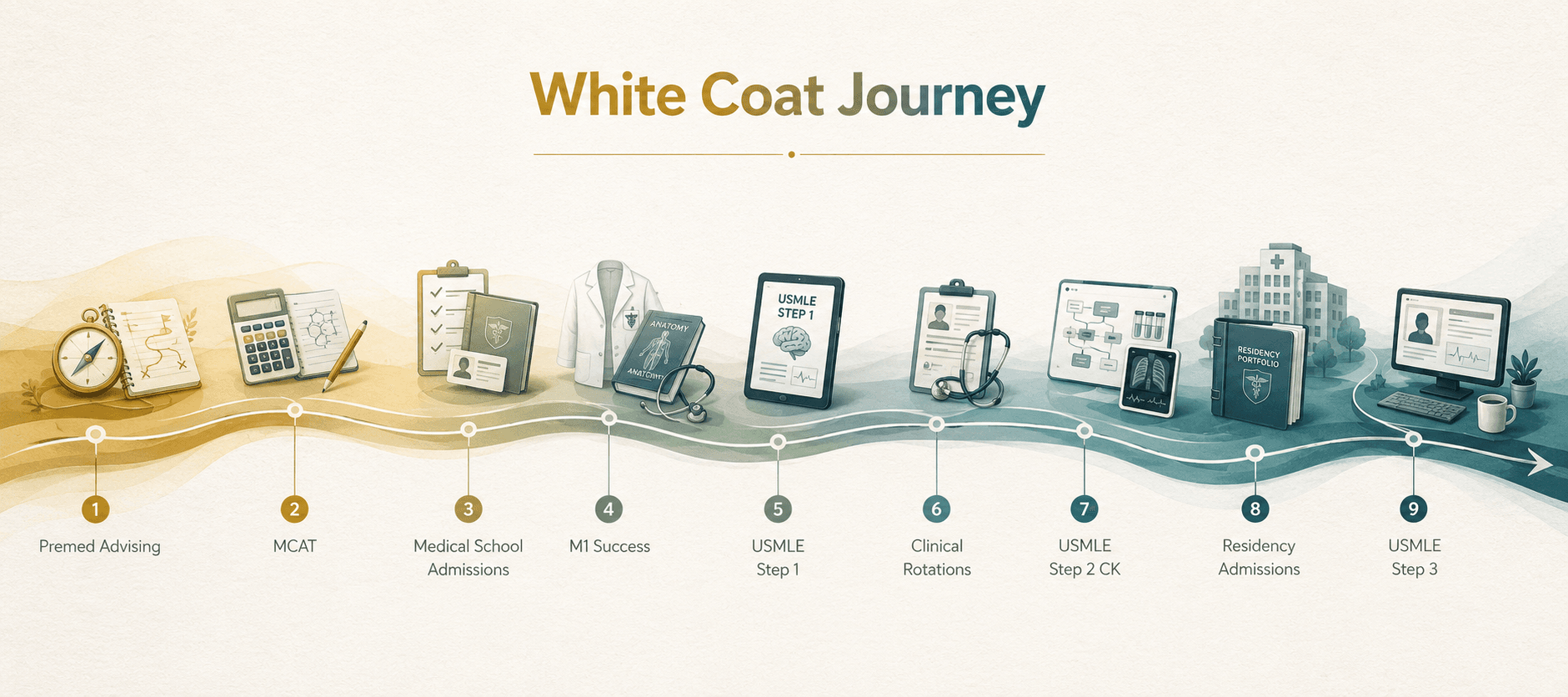
Not every bottleneck applies to every stage. The diagnostic shows questions and outcomes that make sense for where you are in the White Coat Journey.



What Your Result Includes
DDQX's priority is helping every learner choose the level of support that best matches their: (1) timeline, (2) budget, and (3) need for accountability.
We know some students only need a roadmap. Others need a personalized strategy report, 1-on-1 coaching, or the accountability of a course. DDQX Learning is here to support you.
Free Resource Hub
Guides, sample cases, and tools to help learners study with more structure and discipline.
Personalized Strategy Reports
Expert-built study plans, admissions feedback, and competitiveness analyses.
1-on-1 Coaching & Tutoring
Personalized, ongoing support for study planning, applications, and exam preparation.
DDQX Courses & Community
Cohort-based, expert-led guidance on achieving your goals with DDQX Learning methods.
What This Diagnostic Can & Cannot Do
This Diagnostic Can Do
- Clarify your current stage
- Identify a likely learning bottleneck
- Recommend a practical next step
- Route you to relevant DDQX resources/services
- Help you stop guessing about what support you need
This Diagnostic Cannot Do
- Guarantee MCAT, USMLE, or COMLEX scores
- Guarantee interview invitations or admissions decisions
- Guarantee Match outcomes or licensure results
- Guarantee Shelf grades or clerkship evaluations
- Guarantee clinical performance or patient outcomes
White Coat Diagnostic — Frequently Asked Questions
What is the White Coat Diagnostic?
The White Coat Diagnostic is a short DDQX Learning form that helps you identify where you are in the White Coat Journey, what hidden bottleneck may be limiting your progress, and which DDQX pathway may be the best next step. It is designed for learners preparing for the MCAT, medical school admissions, medical school, USMLE exams, clinical rotations, residency applications, or Step 3.
How long does the diagnostic take?
Most learners can complete it in about 5–7 minutes. The form starts by asking your current stage, then shows questions specific to that stage. You do not have to answer questions that are irrelevant to your current goal.
What result will I receive?
Your result includes three parts:
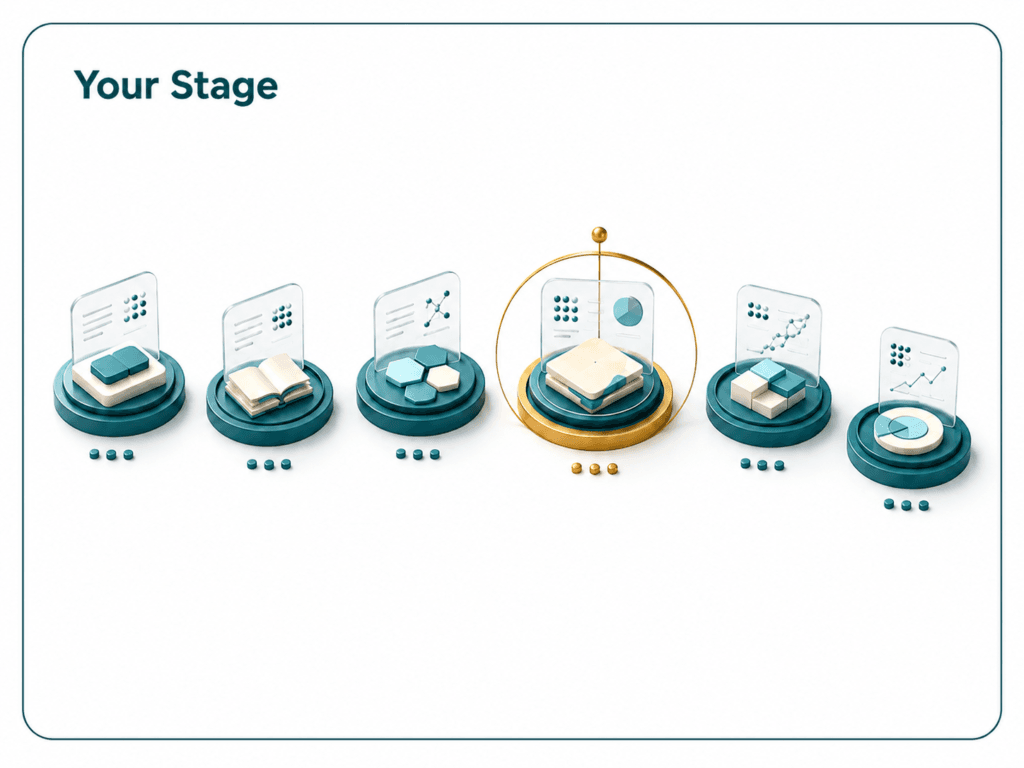
- Your stage in the White Coat Journey
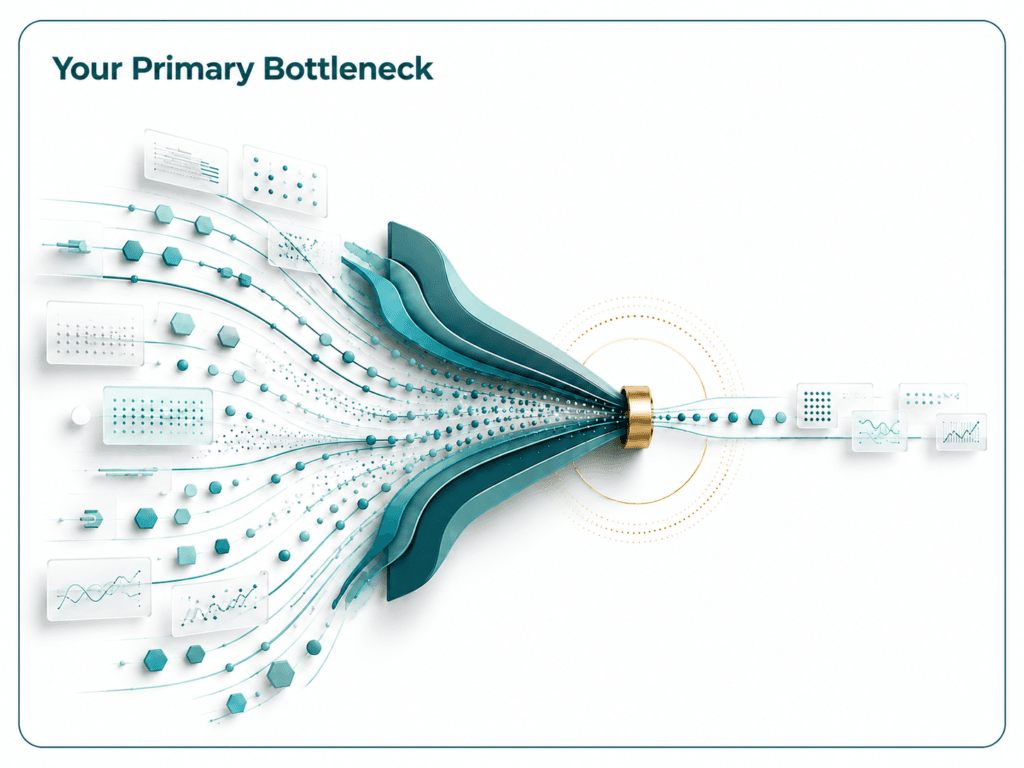
- Your primary hidden bottleneck
- Your recommended DDQX pathway
For example, a learner might receive:
- USMLE Step 2 CK
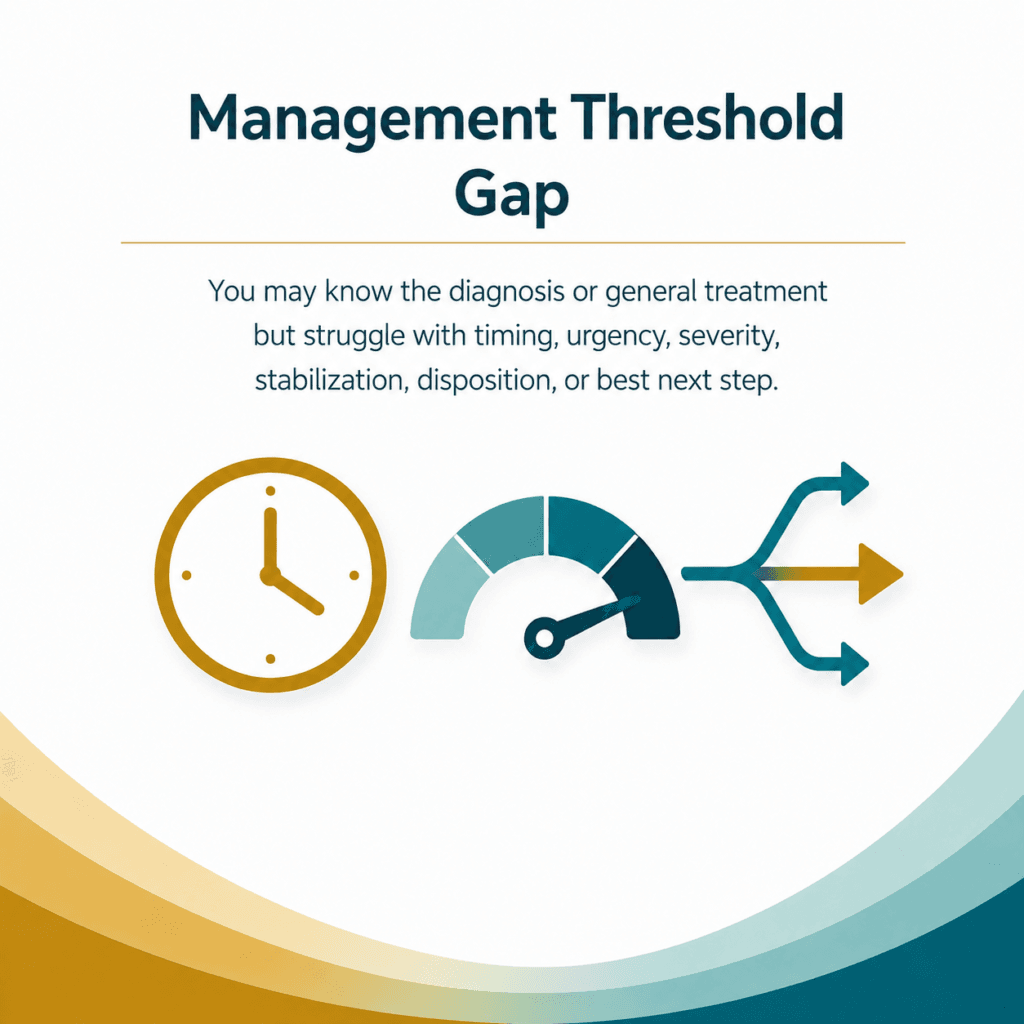
- Management Threshold Gap
- Recommended Pathways: Custom Report, Book a Consult, or Free Resources.
What are the 8 White Coat Journey stages?
The diagnostic can route learners into one of eight stages:
- MCAT
- Medical School Admissions
- Medical School Start
- USMLE Step 1
- Clinical Rotations
- USMLE Step 2 CK
- Residency Admissions
- USMLE Step 3
Each stage has its own question set because each stage creates different pressures and different ways to get stuck.
What are hidden bottlenecks?
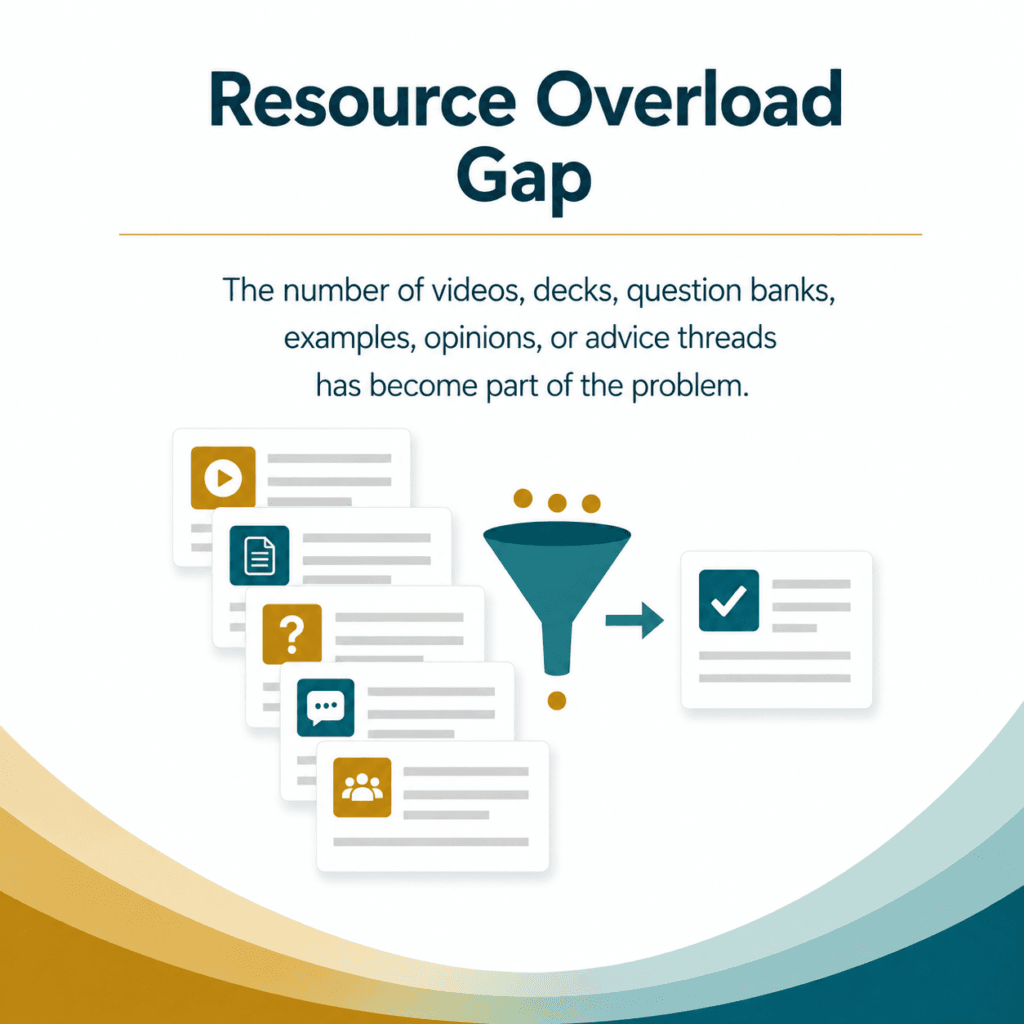
Hidden bottlenecks are the patterns underneath the visible problem. A visible problem might be a low score, a weak draft, a difficult rotation, a stalled study plan, or repeated missed questions. The hidden bottleneck is what may be driving that problem. Examples include weak question review, poor content organization, resource overload, difficulty translating feedback, unclear application story, or trouble choosing the best next step in clinical scenarios.
What bottlenecks does the diagnostic screen for?
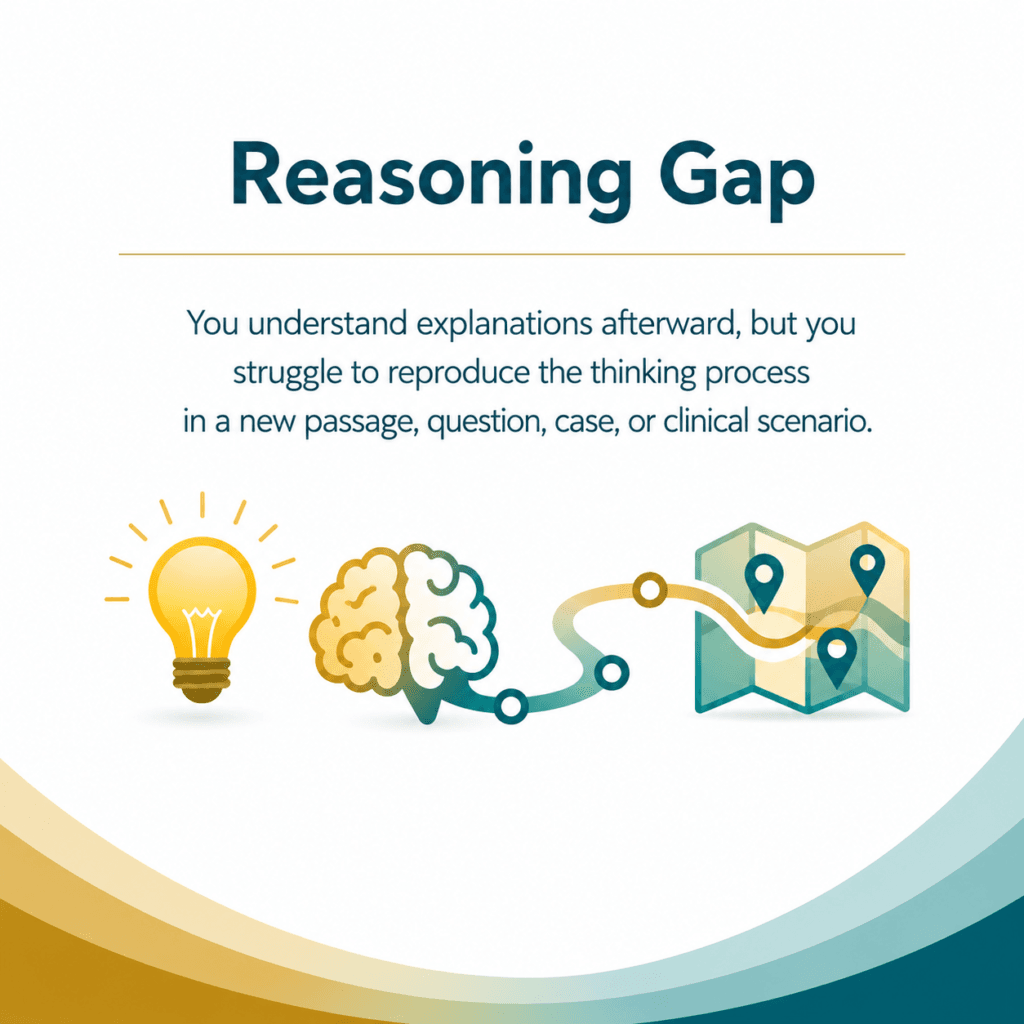
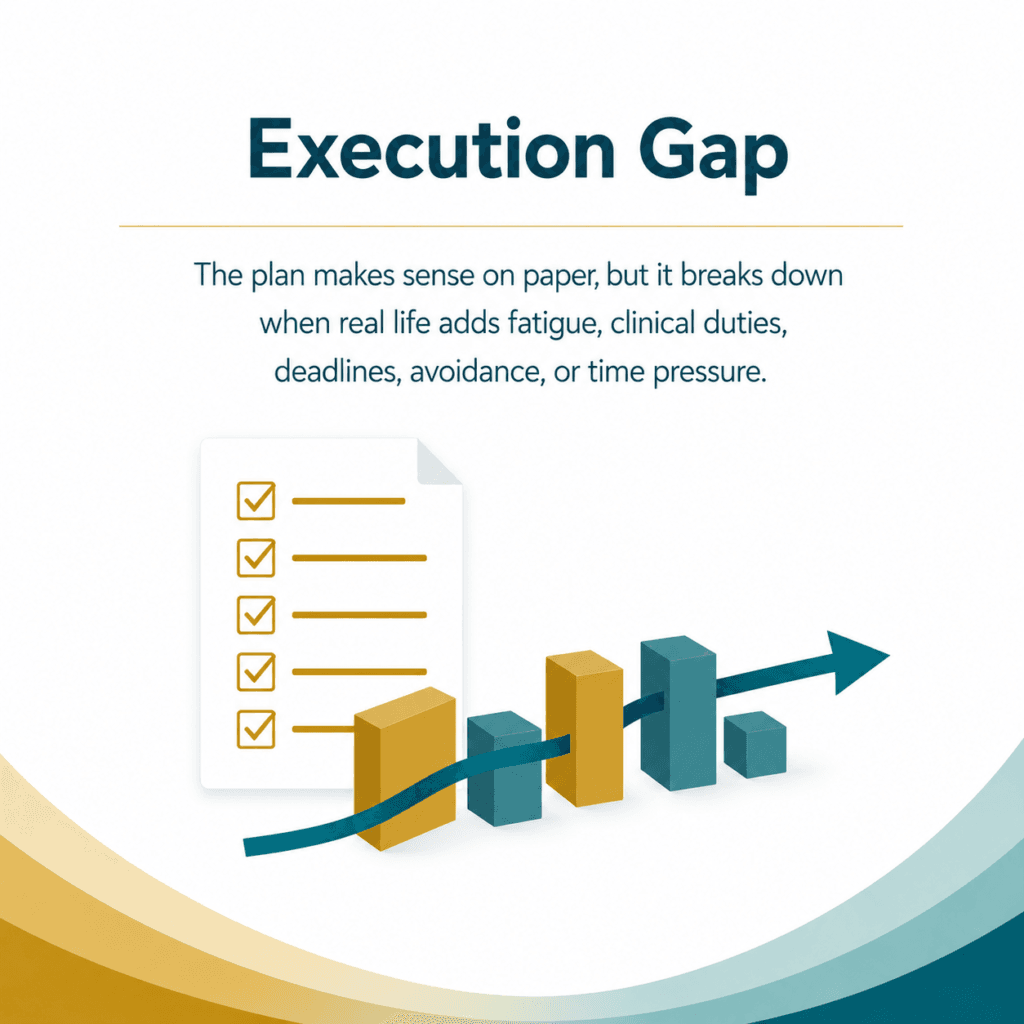
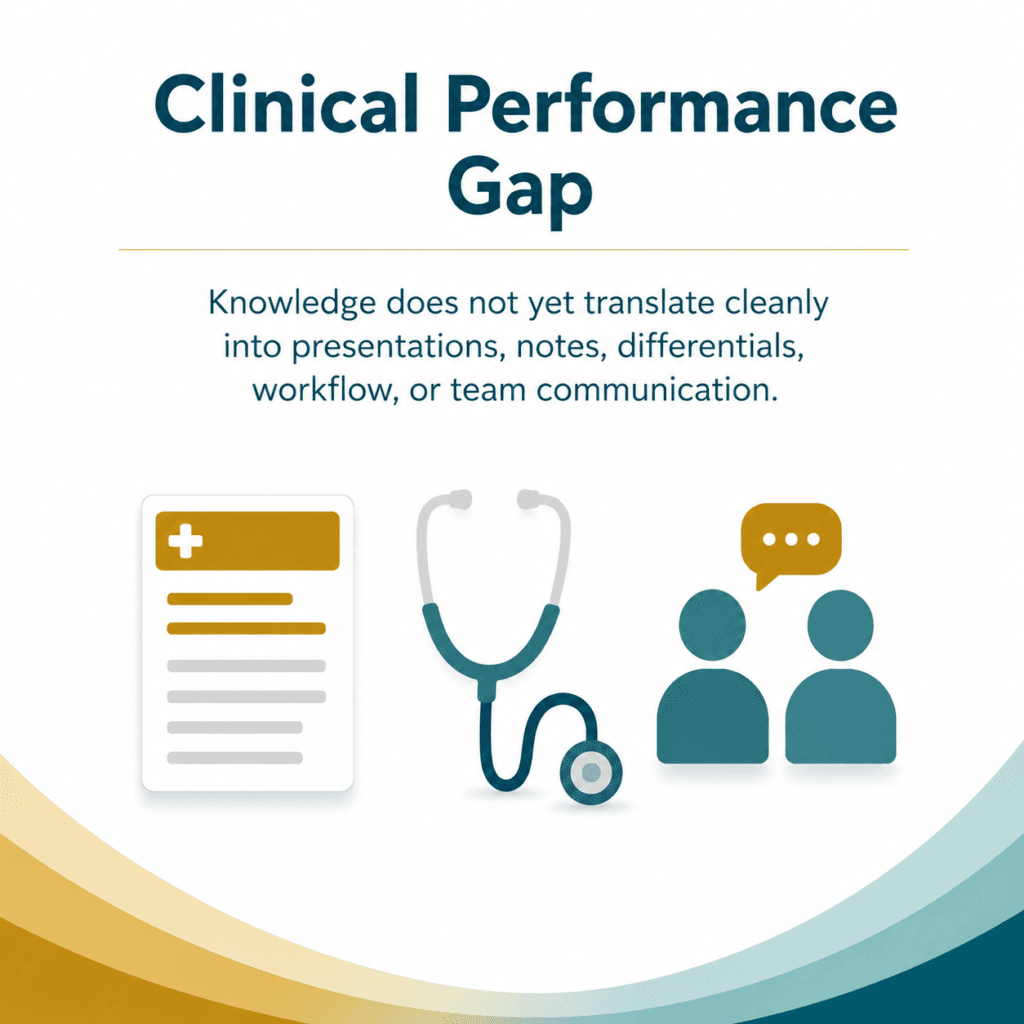
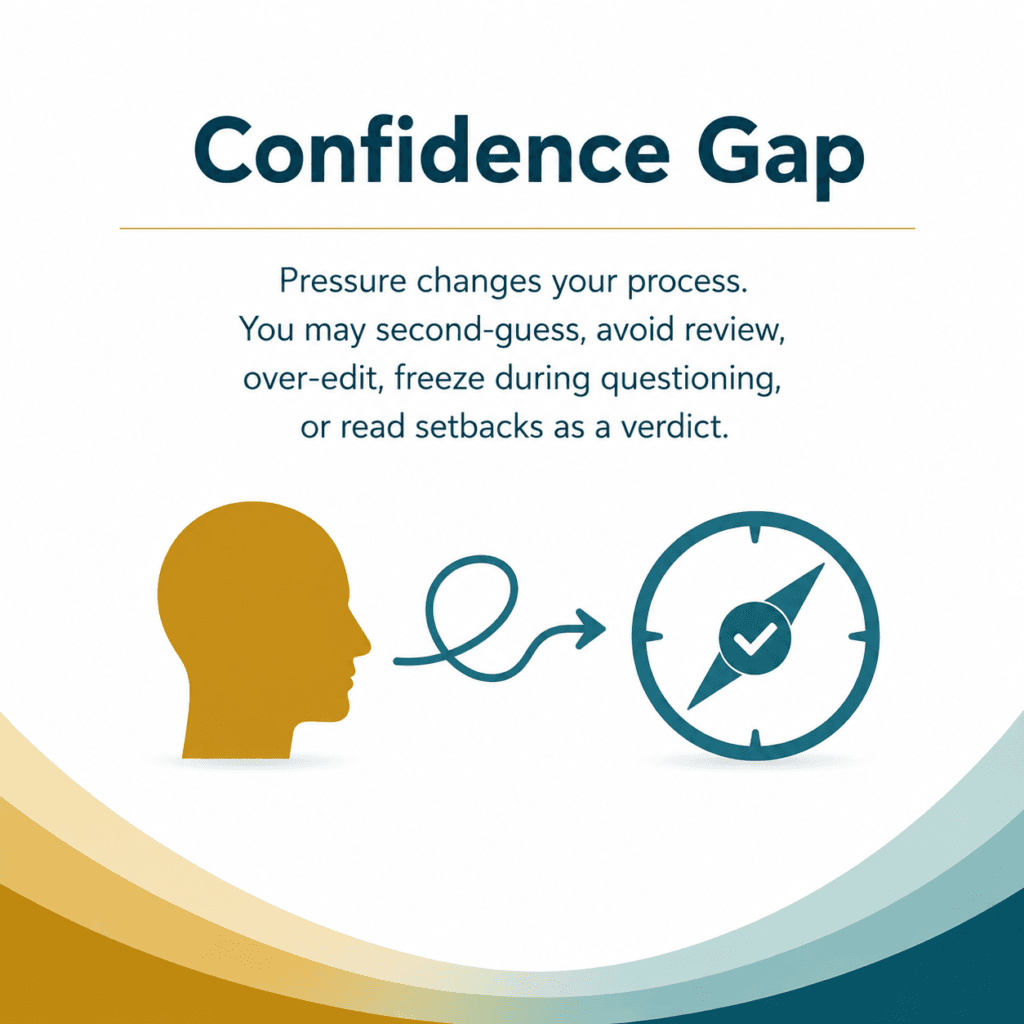
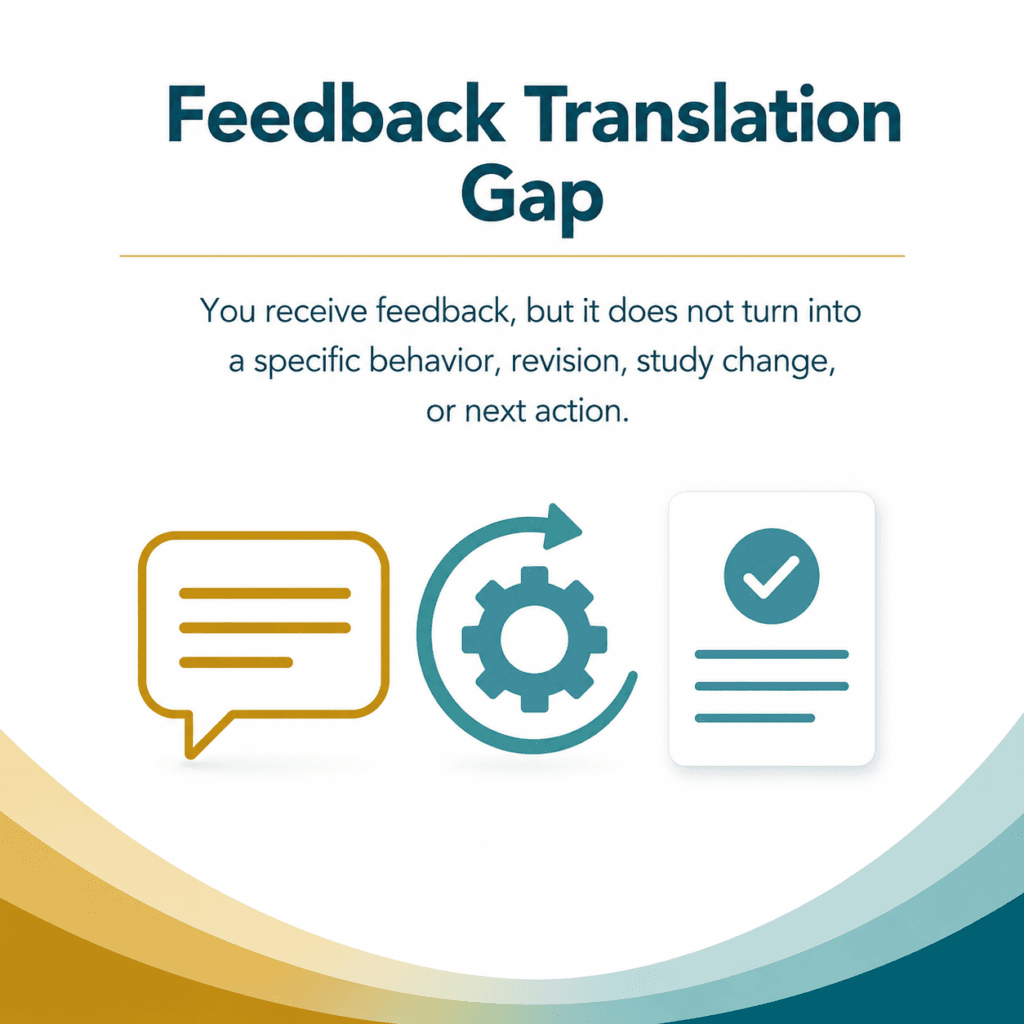
The diagnostic screens for 11 possible hidden bottlenecks:
- Content Organization Gap
- Reasoning Gap
- Strategy Gap
- Execution Gap
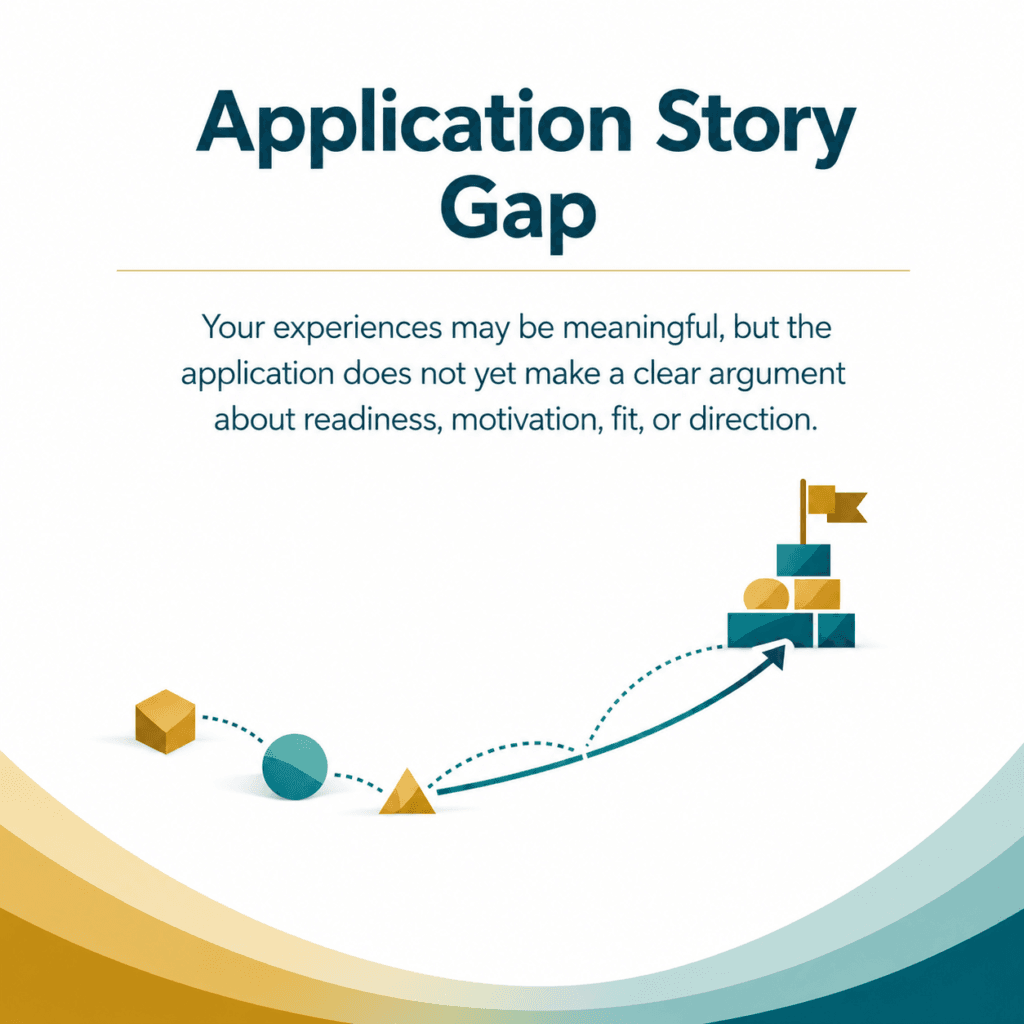
- Application Story Gap
- Writing Clarity Gap
- Clinical Performance Gap
- Management Threshold Gap
- Feedback Translation Gap
- Confidence Gap
- Resource Overload Gap
Not every bottleneck applies to every stage. For example, application-story issues apply to admissions stages, while management-threshold issues are most relevant to clinical rotations, Step 2 CK, and Step 3.
What are the 5 DDQX pathways?
Your result may recommend one of five DDQX support pathways:
- Free Resource Hub — for checklists, planners, roadmaps, guides, and templates
- Courses — for structured teaching, lessons, and 5P walkthroughs
- Custom Reports — for written review of a plan, score gap, application, essay, or materials
- Book a Consult — for a one-time strategy conversation
- Coaching — for ongoing structure, accountability, feedback, and adjustment
The pathway helps match the type of support to the problem identified by the diagnostic.
Is this a medical or psychological diagnosis?
No. The White Coat Diagnostic is an educational tool. It does not diagnose a medical condition, mental health condition, learning disability, or professional competency issue. It is designed to help learners identify a likely educational bottleneck and choose a more practical next step.
Does the diagnostic guarantee a score increase or admissions result?
No. The diagnostic does not guarantee MCAT scores, USMLE scores, admissions decisions, interview invitations, Match outcomes, licensure results, grades, clerkship evaluations, or clinical performance. It is meant to clarify your current learning pattern and recommend a more appropriate next step.
What happens after I submit the form?
After you submit the form, your results are displayed on the page. You will also receive a copy by email. Your submission is logged into a connected Google Sheet so Dr. Deason and the DDQX Learning team can review the results and better understand what learners need.
Will my result be reviewed by Dr. Deason?
Your result is logged for DDQX review and follow-up. Depending on your result and the pathway you choose, you may be directed to a free resource, course, custom report, strategy consult, or coaching option. Submitting the diagnostic by itself does not create a coaching relationship or guarantee individualized review unless you select or purchase a specific DDQX service.
Why does the form ask for my stage first?
Your stage determines which questions you see next. A student preparing for the MCAT should not answer the same questions as someone preparing ERAS or Step 3. The diagnostic uses stage-based logic so the result is tied to the work you are actually doing.
Why does the diagnostic ask what kind of support I prefer?
The same bottleneck can require different next steps depending on the learner. Some students need a free guide. Some need structured teaching. Some need written feedback on a specific draft or score pattern. Others need a focused consult or ongoing coaching. The pathway question helps DDQX recommend support that fits both the problem and your preferred way to work.
Can I take the diagnostic more than once?
Yes. Your result may change as your stage changes or as your bottleneck becomes clearer. For example, a learner may first take it during Step 1 preparation, then return later during clinical rotations or Step 2 CK prep.
Who is this diagnostic for?
The White Coat Diagnostic is for premedical students, medical students, and residents who want help identifying the next right step in their training. It is especially useful for learners who feel stuck, overloaded, uncertain, or unsure whether they need a resource, course, report, consult, or coaching.
Is the diagnostic free?
Yes. Completing the White Coat Diagnostic is free. Your result may point you toward free DDQX resources or paid DDQX services depending on your stage, bottleneck, and preferred pathway.