The DDQX 5P Approach™
A simple structure for thinking through hard questions.
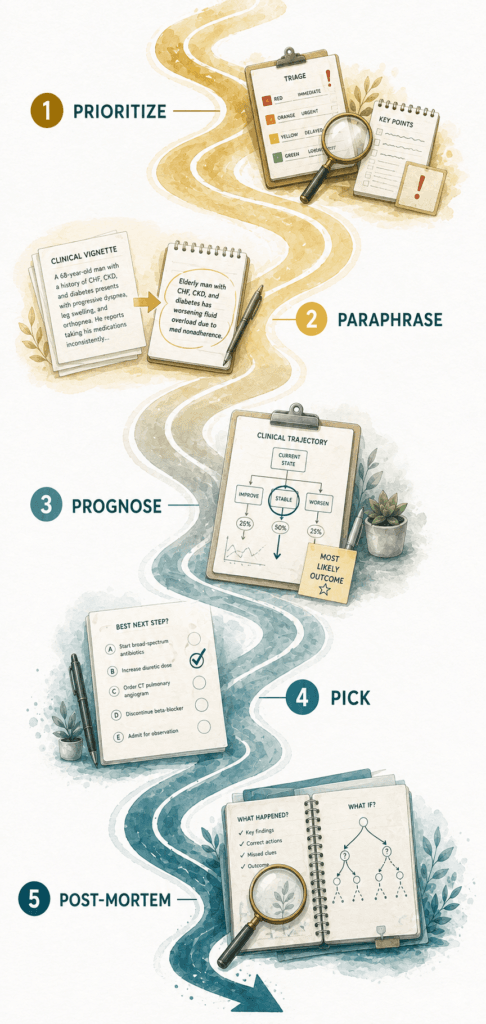
1. Prioritize.
2. Paraphrase.
3. Prognose.
4. Pick.
5. Post-mortem.
DDQX’s core reasoning method gives learners a repeatable way to slow down to identify what matters, translate the problem, predict the next step, choose with discipline, and learn from the outcome.
Use it for MCAT passages, USMLE questions, clinical vignettes, oral presentations, personal statements, residency interviews, and patient-based reasoning.
Settings may change. The sequence does not.
Why Learners Need a Reasoning Sequence
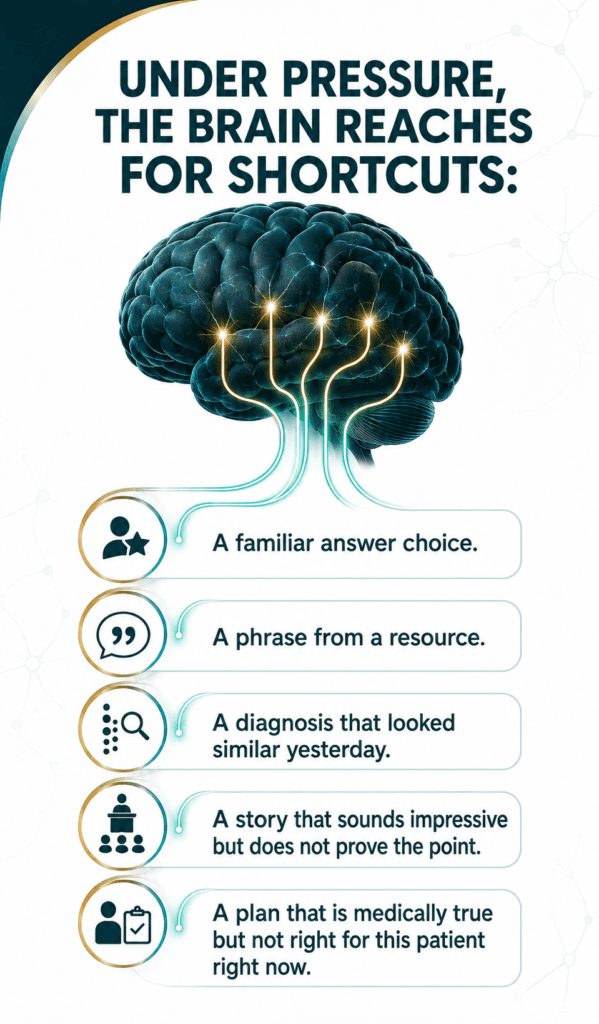
Many medical learners answer before they have finished thinking.
That is more a training problem than a character flaw and it is a pattern that shows up across the White Coat Journey:
Premeds misread passage tasks. Applicants choose the wrong story. Step 1 students memorize facts without applying mechanisms. Students on rotations present too much data without a clear clinical problem. Step 2 learners choose a true answer at the wrong time. Residents preparing for Step 3 know the medicine but struggle with sequencing.
The problem is not always knowledge.
Often, it is the order of thought.
THE 5P APPROACH™ EXPLAINED
1. Prioritize
Identify the information that matters.
In a clinical vignette, that may be age, timing, vital signs, risk factors, medications, labs, imaging, or clinical trajectory.
In an MCAT passage, it may be the experimental setup, comparison group, data trend, or wording of the question.
In an application essay, it may be the experience that best proves readiness rather than the story that sounds most dramatic.
Prioritizing is how you separate signal from noise.

2. Paraphrase
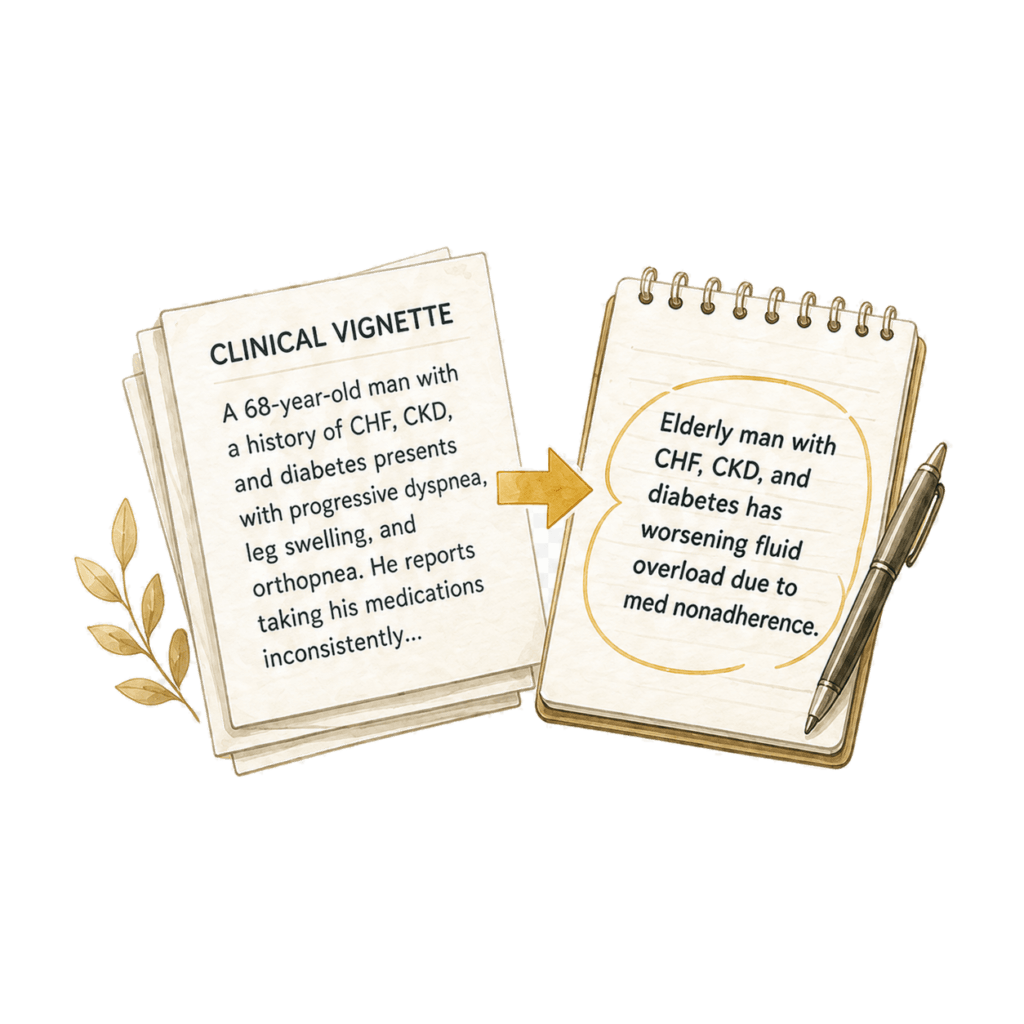
Restate the scenario and question in your own words.
This is where scattered information becomes a working summary.
Ask: ➢ What is the patient’s problem? ➢ What process is being tested? ➢ What task is the question asking me to complete? ➢ What does the reader need to understand? ➢ What is the real issue beneath the surface details?
If you cannot paraphrase the problem, you are more likely to chase familiar words instead of solving the task.
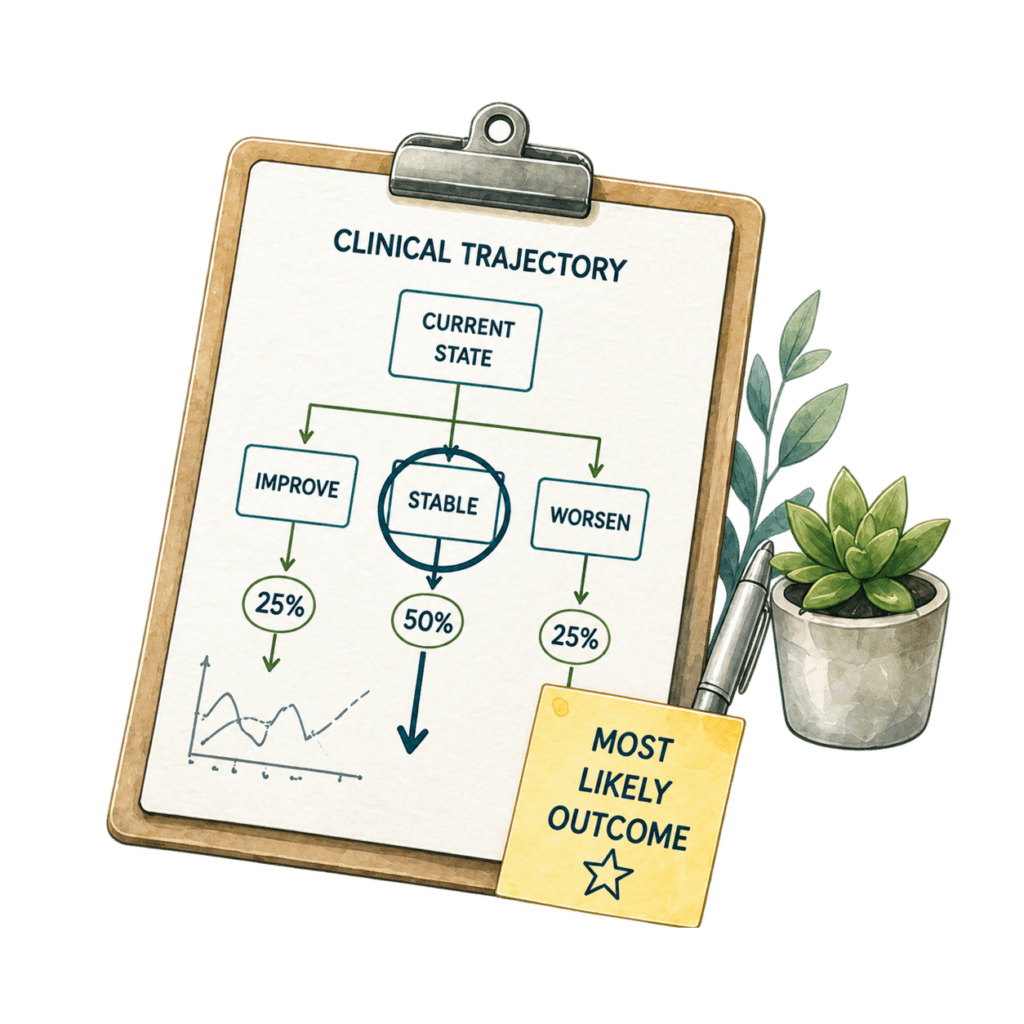
3. Prognose
Predict before you pick.
Before you let the answer choices shape your thinking, ask what the answer should generally say.
That may be a mechanism, a leading diagnosis, a next best step, or long-term managment.
Follow the story to its most likely conclusion.
Prediction protects you from being pulled toward answers that are familiar but poorly matched.
4. Pick
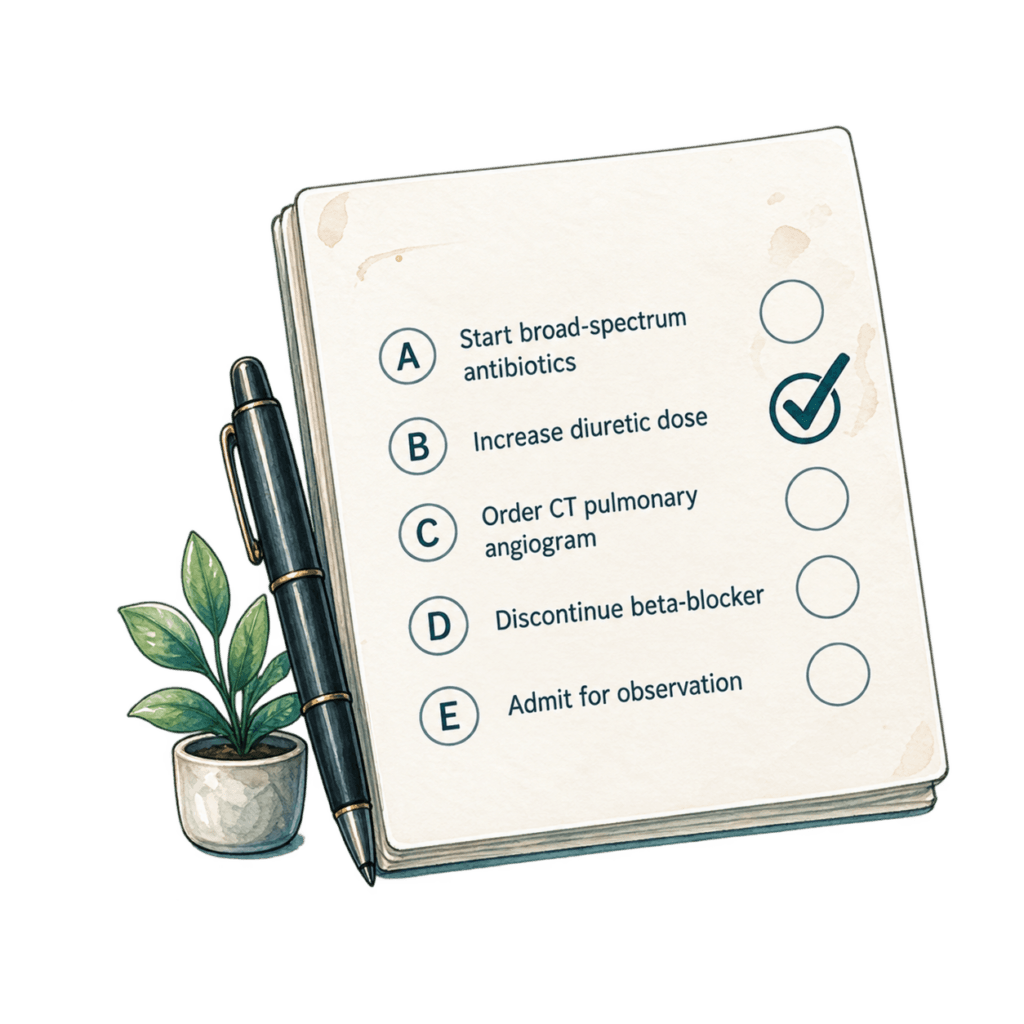
Choose with discipline.
Picking is not guessing with more confidence.
It is comparing the options against your prioritized clues, paraphrased problem, and prediction.
When two options both sound plausible, do not pick the one that feels right. Eliminate the one that fails your prediction or ignores a clue you already flagged.
The choice that survives should answer the actual task.
5. Post-mortem
Learn from the outcome and prepare for future iterations.
Do not only ask, “What was the right answer?”
Ask:
➢ What clue did I miss?
➢ What task did I misunderstand?
➢ What did I fail to predict?
➢ Why was that wrong answer tempting?
➢ What would have changed the answer?
➢ What rule should I carry forward to future cases?
This is what turns random practice into effortful training.

WHAT DO OUR STUDENTS THINK?