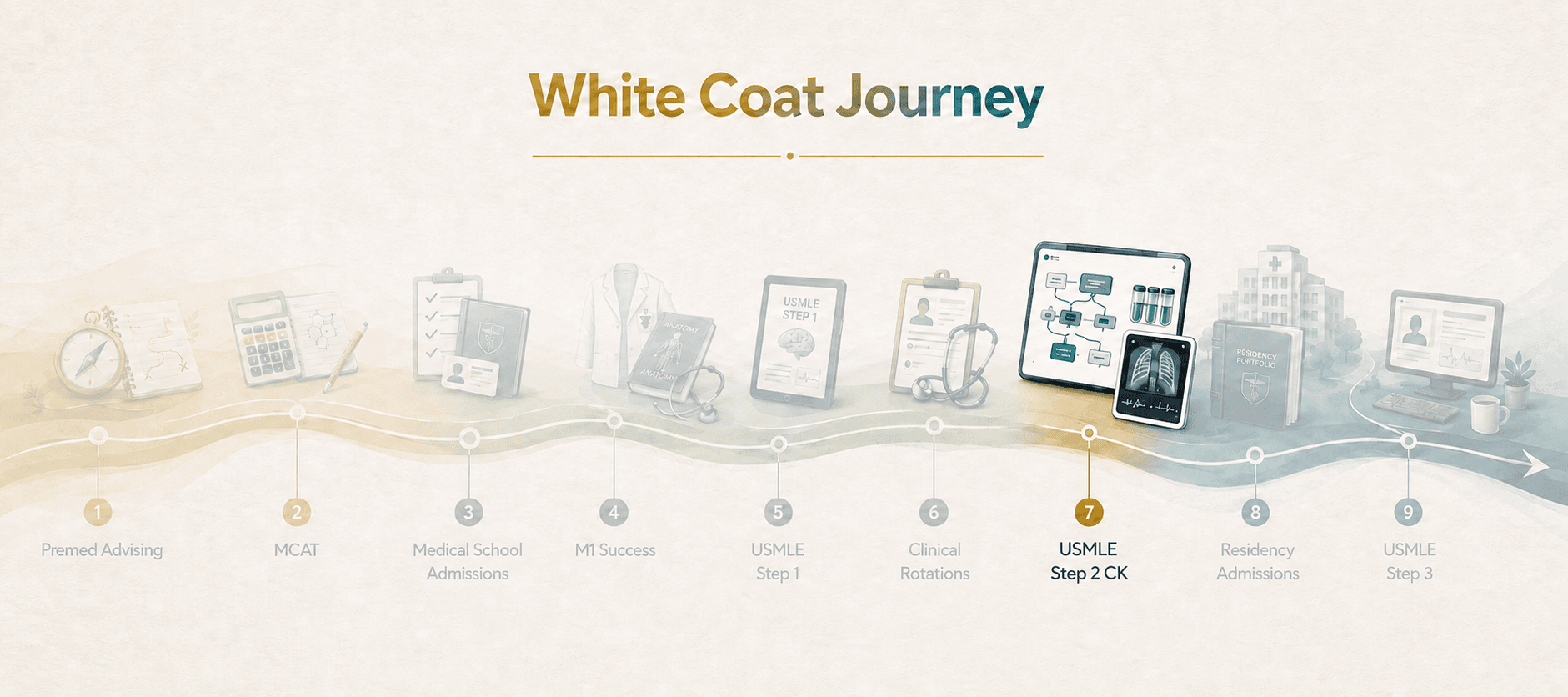
White Coat Journey
DDQX Learning's Approach to USMLE Step 2 CK
Diagnose the gap between knowing medicine and choosing the next step.
You may know the diagnosis, understand the disease, and remember the treatment but still miss the question.
Step 2 CK usually asks something narrower and harder:
What is the best next step, right now, for this patient?

For many students, Step 2 CK can feel more personal than Step 1.
When the score doesn't match what you know you can do at bedside, it stings differently.
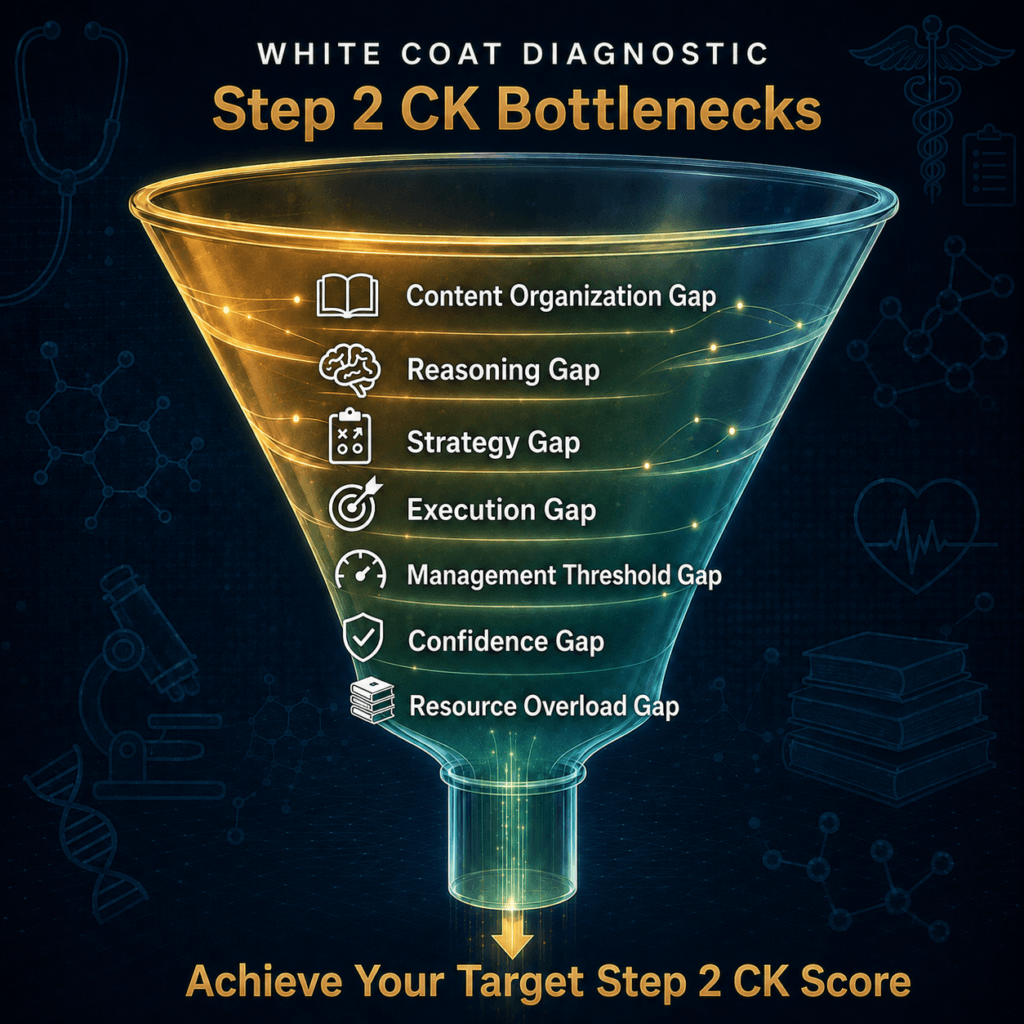
DDQX helps Step 2 CK learners identify the reasoning errors behind missed questions, score plateaus, and inconsistent block performance.
If your Step 2 CK bottleneck is content organization, you may know many diagnoses, guidelines, and treatment facts, but the information may not yet be organized in the way Step 2 CK asks you to use it.
This can show up as:
- ➢ Recognizing the condition but struggling to decide what matters most in the stem
- ➢ Knowing a guideline but not knowing when it applies
- ➢ Missing the clue that changes management
- ➢ Confusing similar next steps because they seem equally reasonable
- ➢ Remembering treatment facts without organizing them by severity or setting
- ➢ Reviewing explanations without turning them into decision rules
The goal is to turn scattered clinical knowledge into a usable Step 2 CK decision system.
If your Step 2 CK bottleneck is reasoning, you may be able to identify the general topic or likely diagnosis, but break down when you have to prioritize competing clues, choose between two reasonable answers, or apply the same disease pattern in a different clinical context.
This can show up as:
- ➢ Recognizing the diagnosis but missing the best next step
- ➢ Narrowing to two reasonable answers and choosing the mistimed one
- ➢ Overvaluing one clue while missing the clinical context
- ➢ Choosing an answer that is true but not right for this patient right now
- ➢ Struggling when a familiar disease appears in a different age group, setting, or severity level
- ➢ Feeling like you know the content but still miss the question
The goal is to strengthen your passage-to-decision process so your knowledge converts into points more reliably.
If your Step 2 CK bottleneck is strategy, you may be doing questions and reviewing explanations, but the overall plan may not yet be matched to your score goal, exam date, clerkship background, and current performance pattern.
This can show up as:
- ➢ Doing more blocks without knowing whether the true issue is content, reasoning, timing, or review quality
- ➢ Reviewing explanations without changing the next week of study
- ➢ Taking self-assessments without a clear interpretation plan
- ➢ Spending too much time on low-yield review while weak subjects remain unstable
- ➢ Treating every missed question as the same kind of problem
- ➢ Feeling busy but unsure whether your plan is actually moving you toward your score goal
The goal is to create a plan that responds to your actual bottleneck rather than simply adding more study time.
If your Step 2 CK bottleneck is execution, you may have a reasonable plan, but the plan may not be consistently producing completed blocks, reviewed misses, corrected patterns, and score movement.
This can show up as:
- ➢ Completing questions but not reviewing them deeply enough
- ➢ Reviewing explanations without changing your next block behavior
- ➢ Letting missed patterns repeat across multiple blocks
- ➢ Falling behind on planned question volume or self-assessment review
- ➢ Having study days that feel busy but do not produce clear next steps
- ➢ Knowing what went wrong but not converting it into a usable rule
The goal is to build a weekly system that turns effort into measurable improvement.
If your Step 2 CK bottleneck is a management threshold gap, you may often know the diagnosis, but the next-best-step decision may still feel unstable.
This can show up when you choose:
- ➢ A test when treatment is needed
- ➢ Treatment when stabilization is needed
- ➢ Outpatient follow-up when escalation is needed
- ➢ Reassurance when further workup is needed
- ➢ Admission when urgent intervention is needed
- ➢ The right intervention at the wrong time
The goal is to sharpen the thresholds that separate reassurance from testing, testing from treatment, treatment from admission, and admission from emergency intervention.
If your Step 2 CK bottleneck is confidence, you may be more prepared than your answer-changing and second-guessing suggest.
This can show up as:
- ➢ Over-reading stems for rare exceptions
- ➢ Abandoning the most likely answer without a strong reason
- ➢ Treating every unfamiliar detail as a reason to change direction
- ➢ Changing answers late because uncertainty feels uncomfortable
- ➢ Spending too much time trying to feel completely certain
- ➢ Letting one difficult question disrupt the rest of the block
The goal is to rebuild trust in your clinical reasoning while still identifying the patterns that genuinely need correction.
If your Step 2 CK bottleneck is resource overload, you may be surrounded by too many inputs.
This can show up as:
- ➢ Switching resources whenever your score feels stuck
- ➢ Spending more time organizing tools than correcting patterns
- ➢ Using multiple resources for the same purpose
- ➢ Feeling unsure whether UWorld, NBMEs, CMS forms, or outside resources should guide your next decision
- ➢ Adding more review before identifying the actual reason for missed questions
- ➢ Letting score predictors or online advice create more anxiety than clarity
The goal is to simplify your Step 2 CK system so your resources support one coherent score-improvement plan.
When every miss gets the same label — “I need to study more” — review stays too vague to fix anything.
A missed Step 2 CK question may involve knowledge, but the breakdown often happens somewhere else between reading the stem and clicking the answer.
DDQX Learning helps you move from "just do more" to targeted fixes.
- Constantly switching resources
- Feeling behind in every system
- Restarting study plans repeatedly
- Reviewing questions without changing behavior
- Taking full-lengths without knowing what to fix next
- Each resource has a defined job
- Your weekly plan has fewer moving parts
- Missed questions are classified by failure point
- Practice data determines what changes next
- Your Step 2 CK plan fits your application timeline
Step 2 CK asks whether you can read the presentation in front of you and decide what should happen next.
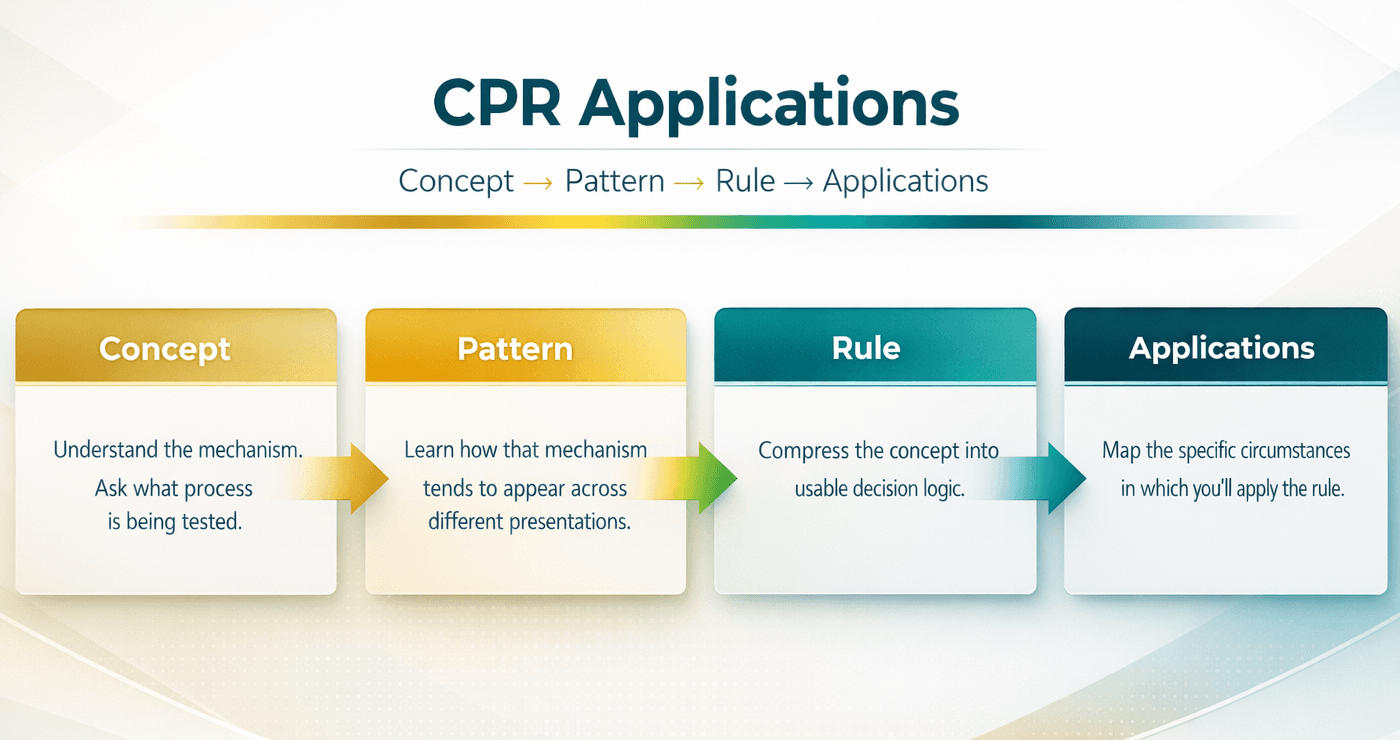
Use CPR Applications when studying to give your knowledge structure:
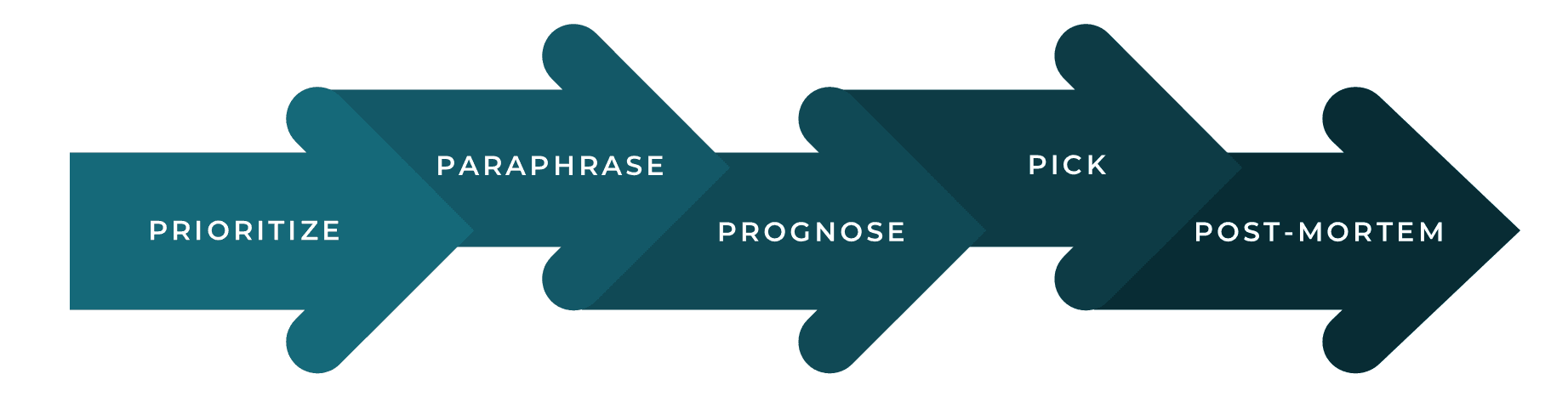
Use the 5P Approach™ to find the reasoning path and where you stepped off it on misses.
DDQX meets your timeline, budget, and need for accountability.
Every pathway tailors guidance to your particular circumstances and passions.
Choose the pathway that helps you reach your desired outcome in the setting you prefer.
Free Resource Hub
Guides, sample cases, and tools to help learners study with more structure and discipline.
Personalized Strategy Reports
Expert-built study plans, admissions feedback, and competitiveness analyses.
1-on-1 Coaching & Tutoring
Personalized, ongoing support for study planning, applications, and exam preparation.
DDQX Courses & Community
Cohort-based, expert-led guidance on achieving your goals with DDQX Learning methods.
USMLE Step 2 CK is the 7th stage in the White Coat Journey.