White Coat Journey
DDQX Learning's Approach to USMLE Step 3
Build a Step 3 plan that respects the realities of residency.
Step 3 is usually prepared for in the margins. Before rounds. After sign-out. Between call shifts. On days off that do not feel like days off.
You do not need a study plan written for someone with unlimited time. You need one that can survive residency.

Step 3 is easy to postpone until it becomes stressful.
Residents know they need to take it, but it rarely feels urgent until the timeline tightens.
You can be seeing patients every day and still feel unprepared for the exam. Clinical exposure helps, but it does not assemble a Step 3 strategy on its own.
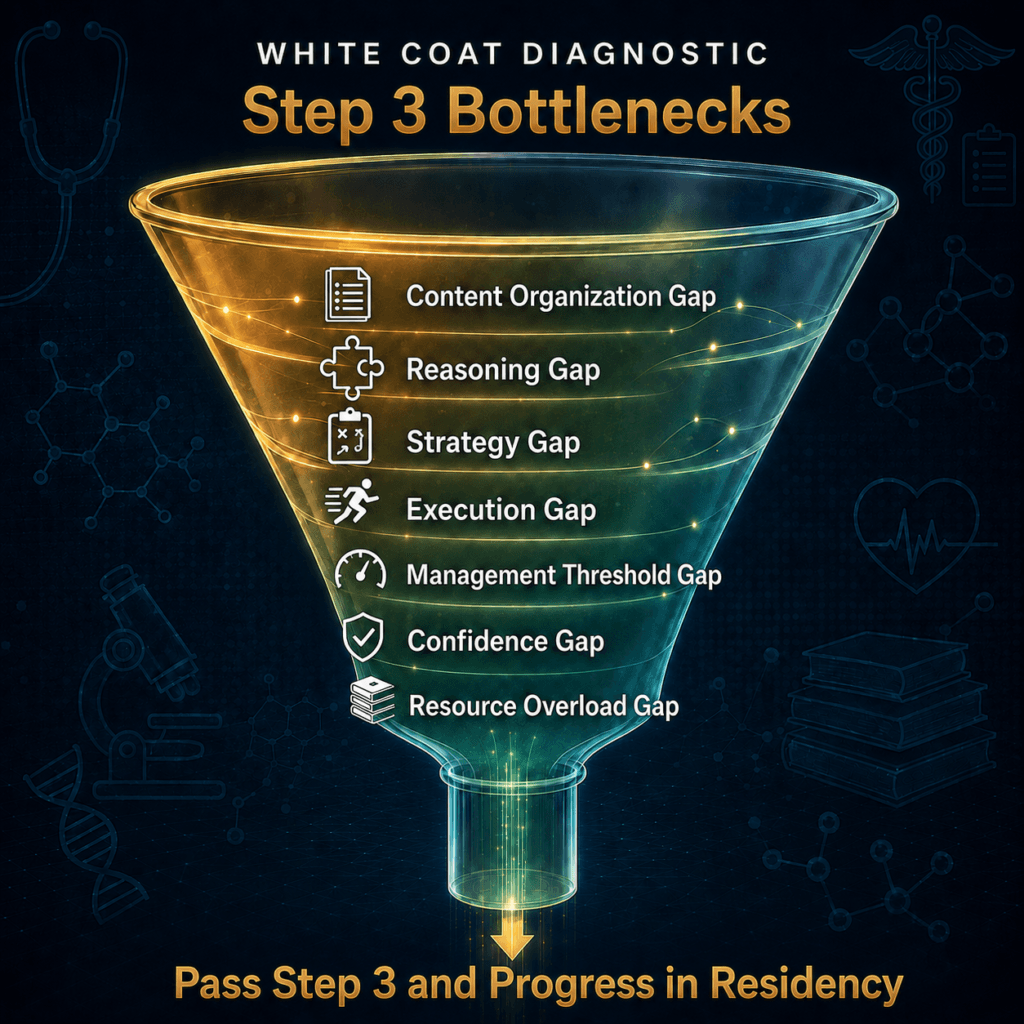
If your Step 3 bottleneck is content organization, you may know a large amount of clinical medicine, but the information may not yet be organized in the way Step 3 asks you to use it.
This can show up as:
- ➢ Recognizing the condition but hesitating on what to do next
- ➢ Knowing the diagnosis but feeling unsure what to monitor
- ➢ Ordering tests or treatments without a clear sequence
- ➢ Struggling to connect acute management with follow-up care
- ➢ Feeling less confident when questions shift from diagnosis to longitudinal management
- ➢ Finding CCS cases more confusing because diagnosis, workup, treatment, and monitoring feel separated
The goal is to organize clinical knowledge so it becomes easier to use in Step 3 questions and CCS cases.
If your Step 3 bottleneck is reasoning, you may know the diagnosis or general topic, but the challenge may be deciding what the patient needs now, what can wait, and what would be unsafe to miss.
This can show up as:
- ➢ Recognizing the diagnosis but hesitating on the next step
- ➢ Knowing what treatment is needed but feeling unsure when to start it
- ➢ Ordering reasonable tests without prioritizing urgency
- ➢ Missing what would be unsafe to delay
- ➢ Struggling with sequencing in CCS cases
- ➢ Feeling uncertain about monitoring, prevention, disposition, or follow-up
The goal is to strengthen your patient-management reasoning to move from “I know what this is” to “I know what to do next.”
If your Step 3 bottleneck is strategy, you may be studying, but the plan may not yet fit your real situation.
This can show up as:
- ➢ Treating Step 3 like another preclinical content exam
- ➢ Studying broadly without knowing which risks matter most
- ➢ Spending too much time on passive review when clinical decision practice is needed
- ➢ Delaying CCS practice until too late
- ➢ Using a study schedule that does not fit your clinical workload
- ➢ Taking practice assessments without a clear plan for what to change next
The goal is to build a realistic Step 3 plan that fits your schedule and targets the highest-yield risks first.
If your Step 3 bottleneck is execution, you may understand what needs to happen, but residency demands may be making consistent preparation difficult.
This can show up as:
- ➢ Delayed question blocks
- ➢ Unfinished CCS practice
- ➢ Inconsistent review
- ➢ Missed study days after long shifts
- ➢ A plan that looks reasonable on paper but does not survive the clinical schedule
- ➢ Feeling like every week requires restarting the plan
The goal is to convert preparation into a repeatable weekly rhythm that accounts for the reality of residency.
If your Step 3 bottleneck is a management threshold gap, you may often recognize the diagnosis, but the difficult part may be deciding the correct level of action.
This can show up in the sequencing the care plan:
- ➢ Stabilizing first
- ➢ Ordering the right tests
- ➢ Avoiding unnecessary tests
- ➢ Starting treatment at the right time
- ➢ Monitoring response
- ➢ Planning safe follow-up
The goal is to sharpen the thresholds that separate routine care from urgent action and incomplete management from safe disposition.
If your Step 3 bottleneck is confidence, you may be more clinically capable than your test behavior suggests.
This can show up as:
- ➢ Over-ordering because you are afraid of missing something
- ➢ Under-ordering because you are unsure what is appropriate
- ➢ Changing correct answers without a clear reason
- ➢ Hesitating in CCS cases even when the next step is reasonable
- ➢ Assuming one weak area means you are not ready
- ➢ Letting one difficult question or case disrupt the rest of your performance
The goal is to rebuild trust in your clinical judgment while still identifying the patterns that need focused correction.
If your Step 3 bottleneck is resource overload, you may be surrounded by too many inputs.
This can show up as:
- ➢ Switching resources when your practice performance feels uncertain
- ➢ Spending more time organizing tools than completing questions or CCS cases
- ➢ Using multiple resources for the same purpose
- ➢ Delaying CCS practice because another content resource feels more urgent
- ➢ Following study schedules that do not fit your clinical workload
- ➢ Feeling active but not clearly closer to readiness
The goal is to simplify your Step 3 preparation into one coherent pass-focused system.
The gap often lies between clinical exposure and exam execution.
Preparing for Step 3 gets harder when clinical work is mistaken for exam preparation.
DDQX Learning helps you move from unstructured exposure to planned execution.
- Constantly postponing because residency feels too busy
- Assuming daily patient care will automatically prepare you
- Feeling uncertain about CCS workflow / order sequencing
- Reviewing questions without identifying reasoning errors
- Trying to build a study plan that only works on ideal days
- Your Step 3 timeline fits your rotation schedule
- Each study block has a defined purpose
- CCS cases follow a repeatable workflow
- Missed questions are classified by failure point
- Your plan can survive call, fatigue, and imperfect weeks
Step 3 preparation has to fit the exam and your schedule.
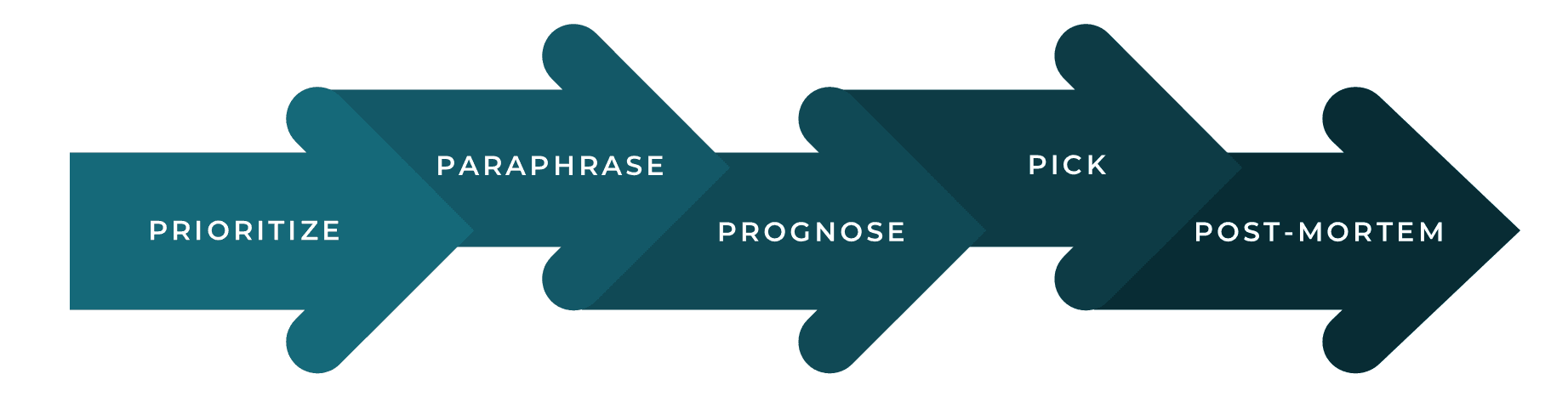
For Step 3, the 5P Approach™ works on questions and on the plan itself. A resident’s schedule has to bend without breaking. The goal is a plan you can revise as you go.
DDQX meets your timeline, budget, and need for accountability.
Every pathway tailors guidance to your particular circumstances and passions.
Choose the pathway that helps you reach your desired outcome in the setting you prefer.
Free Resource Hub
Guides, sample cases, and tools to help learners study with more structure and discipline.
Personalized Strategy Reports
Expert-built study plans, admissions feedback, and competitiveness analyses.
1-on-1 Coaching & Tutoring
Personalized, ongoing support for study planning, applications, and exam preparation.
DDQX Courses & Community
Cohort-based, expert-led guidance on achieving your goals with DDQX Learning methods.
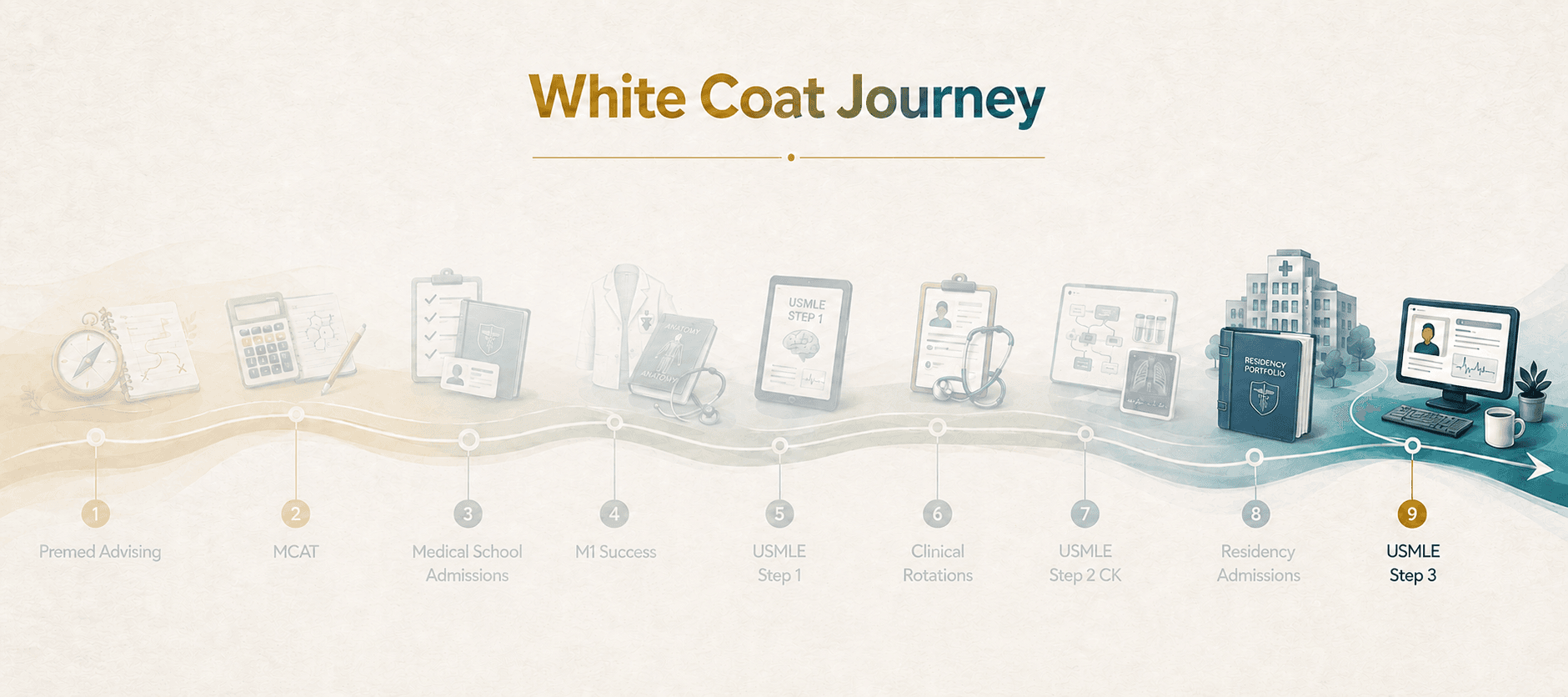
USMLE Step 3 is the 9th stage in the White Coat Journey.