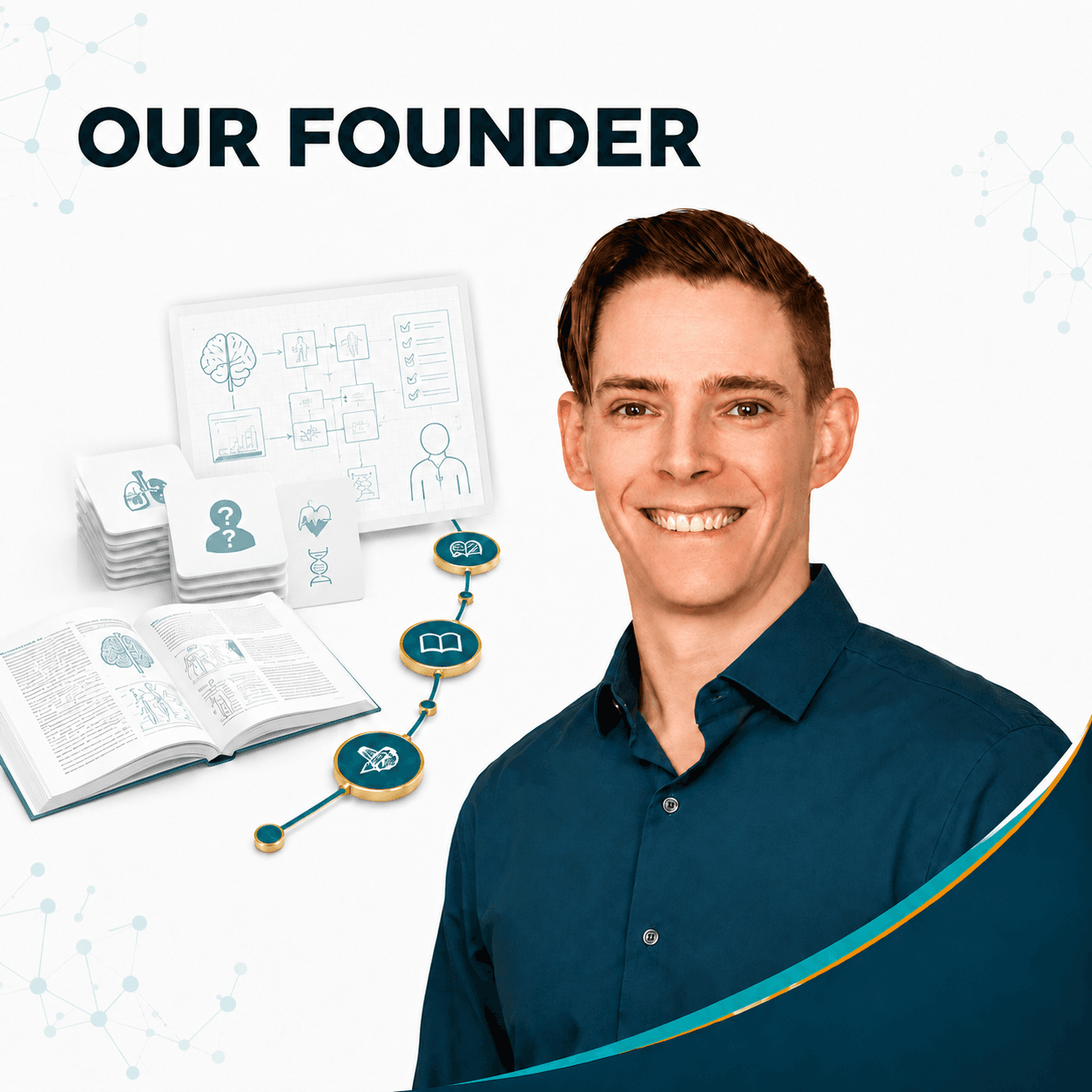
Meet Dr. Brandon Deason
Written directly by the Founder, CEO, & Lead Educator of DDQX Learning
At several points in my education and career, I was convinced I knew what mattered, how to succeed, where I was going, or why decisions were made.
Sometimes I was right. Other times I was wrong.
I learned the most the times I was most wrong.
Those outcomes forced me to reconsider the processes and underlying assumptions that had produced them.
This, in turn, shaped how I teach, how I approach medical education, and why I built DDQX Learning.
Five Events Have Reshaped How I Think About Success
While I consider myself a lifelong learner who continually adapts, these five events have been the greatest instances of upheaval that forced an immediate change in my life.
Looking backward, I see them now as a progression in the questions I was learning to ask.
Event 1 — I thought I knew what mattered.
I was only 16 years old when I began college at Arizona State University's 45,000-student campus on a full academic scholarship.
While I wasn’t the first person in my family to get into college, I was the first to want to go on to medical school. So, with no direct physician mentorship, I focused on doing what was expected.
➢ I ended each semester of my hard science major (biochemistry) with straight As.
➢ I took an MCAT class in June and July, tested in August, and knocked it out of the park.
➢ I was accepted into every research lab I asked to join.
➢ I was elected to every premed position I ran for, both locally and nationally.
Those successes thoroughly convinced me I was a top medical school candidate and that any program would accept me. With that in mind, I applied to seventeen of the most prestigious medical schools in the country plus my two in-state programs, almost as an afterthought.
I was interviewed by two of the nineteen programs…the two in-state. I was accepted by none.
When I applied again four years later, I was interviewed and accepted by one out of one.
What changed? In short, my perspective.
Not only had I gained clinical experience as a paramedic, continued teaching for the MCAT, and retested even higher when my original score expired, but I had also started a family.
I learned it wasn’t enough to just do what’s expected—I needed to show my character and growth. So I rewrote my personal statement from an autobiography into connected stories that demonstrated my readiness. Instead of treating my past activities as a list of accomplishments and held responsibilities, I explained how a specific observation or event from each had changed the way I wanted to approach scenarios inside or outside of medicine.
I was 23 years old now, back on the “right track” and where I belonged. I was certain I now knew what it took to succeed in medical school, residency, and beyond.
Event 2 — I thought I knew how to learn.
[Coming Soon]
Event 3 — I thought I knew where I was going.
[Coming Soon]
Event 4 — I thought I knew why decisions were made.
[Coming Soon]
Event 5 — I think I know DDQX's what, where, how, and why.
[Coming Soon]